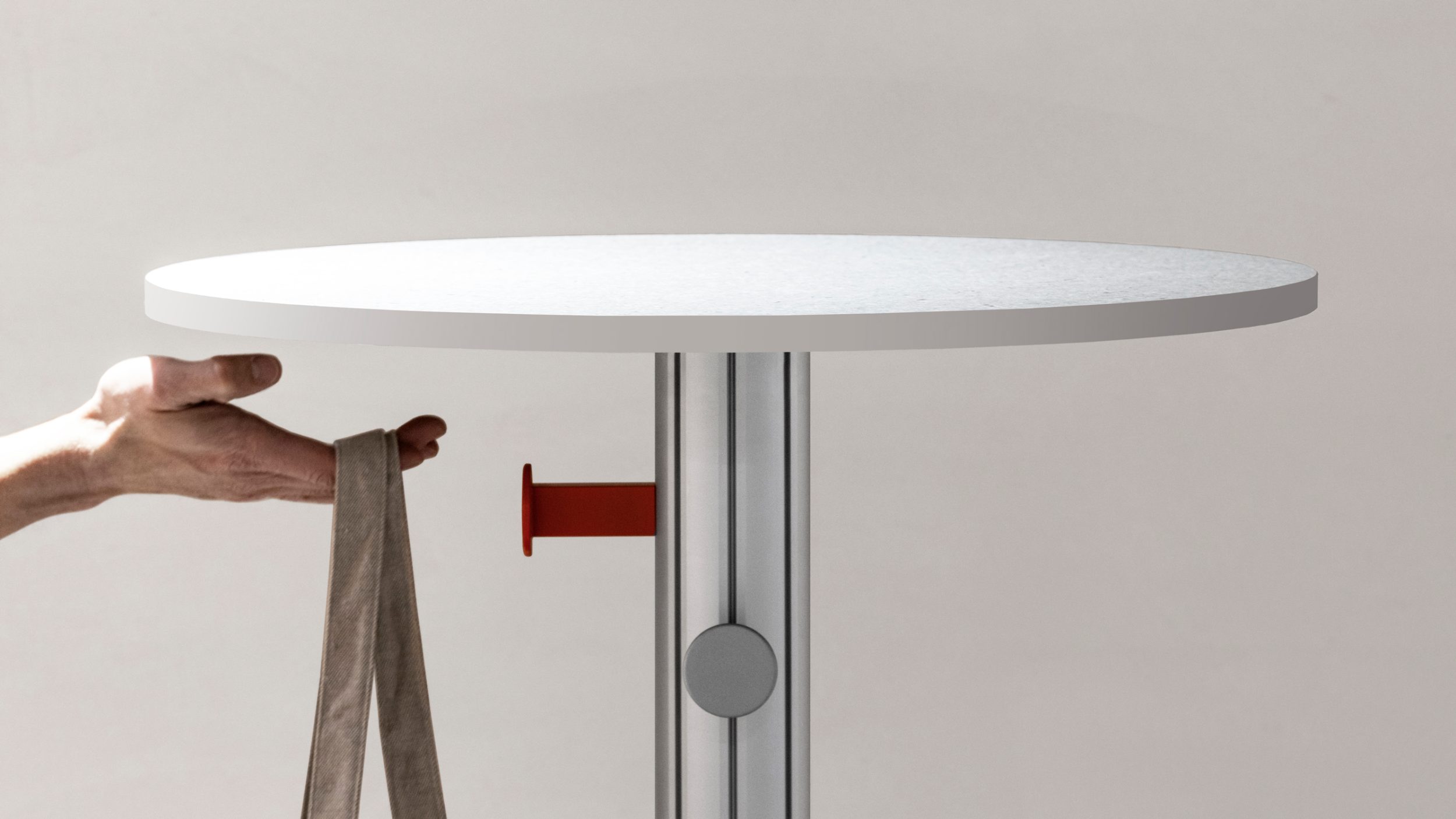
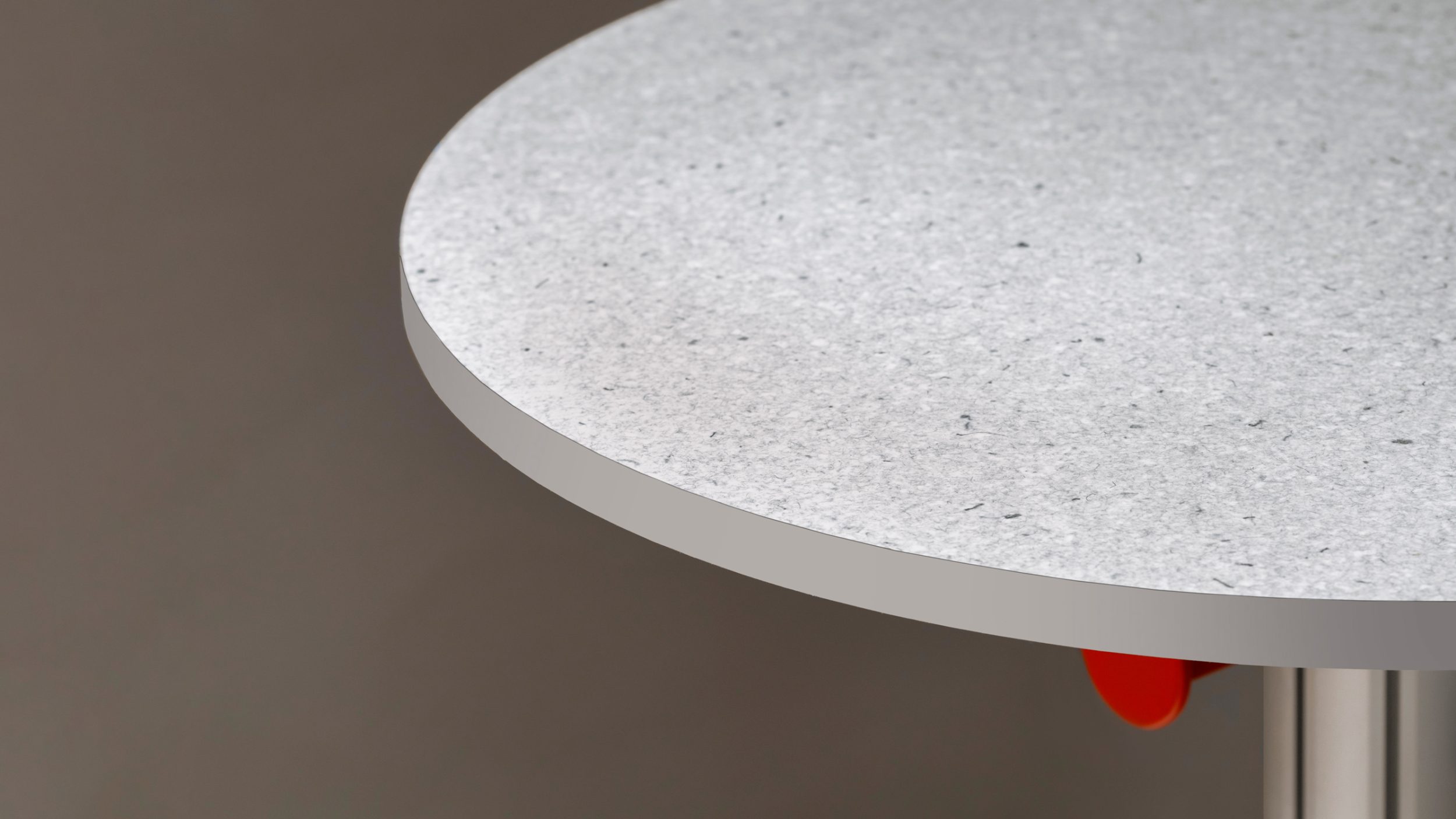
For Kristalia, sustainability and technology are two complementary forces that guide every design decision. We work with regenerated materials, promote circular production processes, and explore new design approaches to reduce environmental impact while enhancing the quality of our products. Along this path, the combination of innovative materials and advanced technical solutions becomes essential. This is why we chose to use a fully regenerated material developed by Kvadrat Really, combining it with Ottavo — a new system based on the mechanical connection of aluminum elements. For us, it’s a natural pairing: bringing together a sustainable material made from reclaimed textile waste with a structure designed to be lightweight, modular, and easy to disassemble.
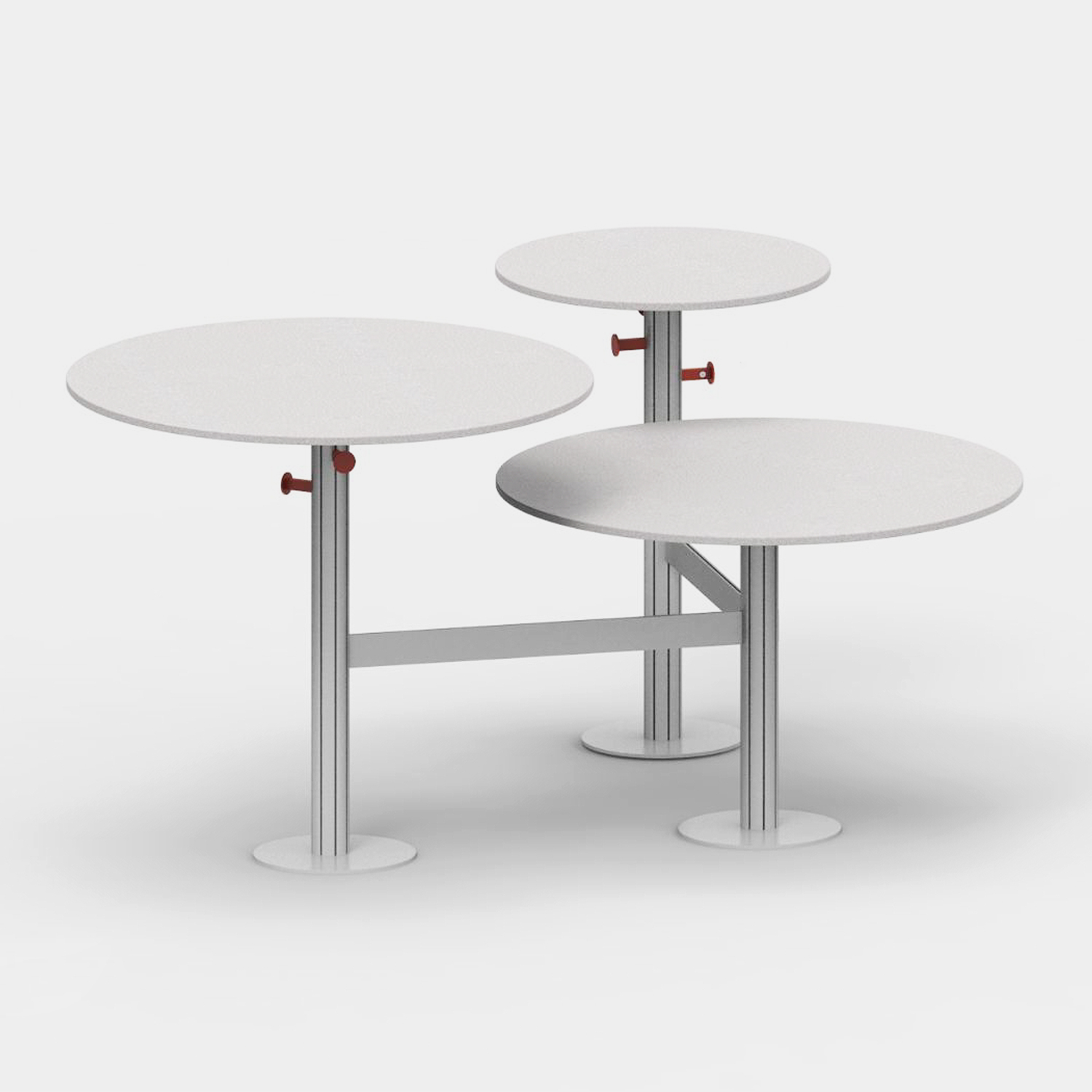
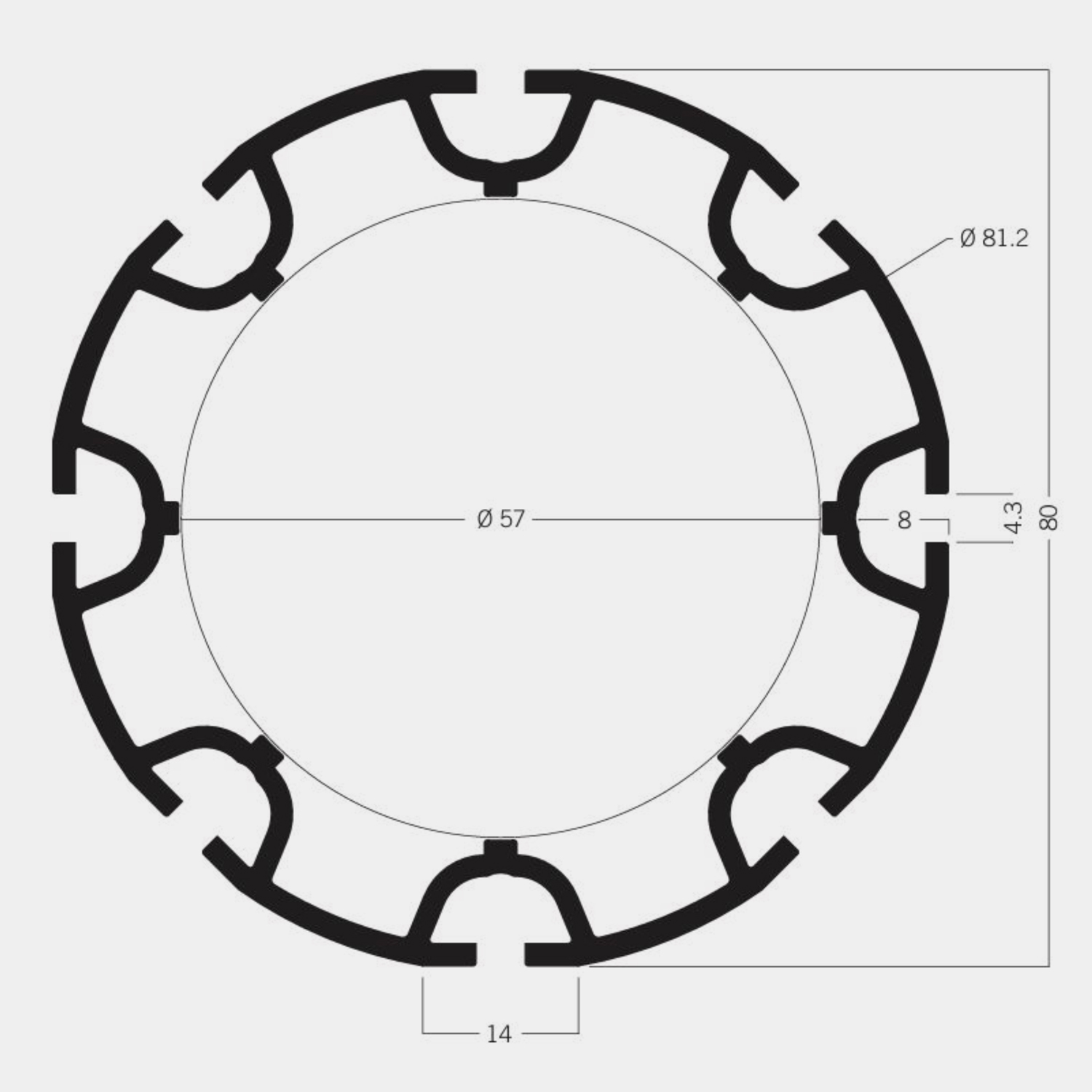
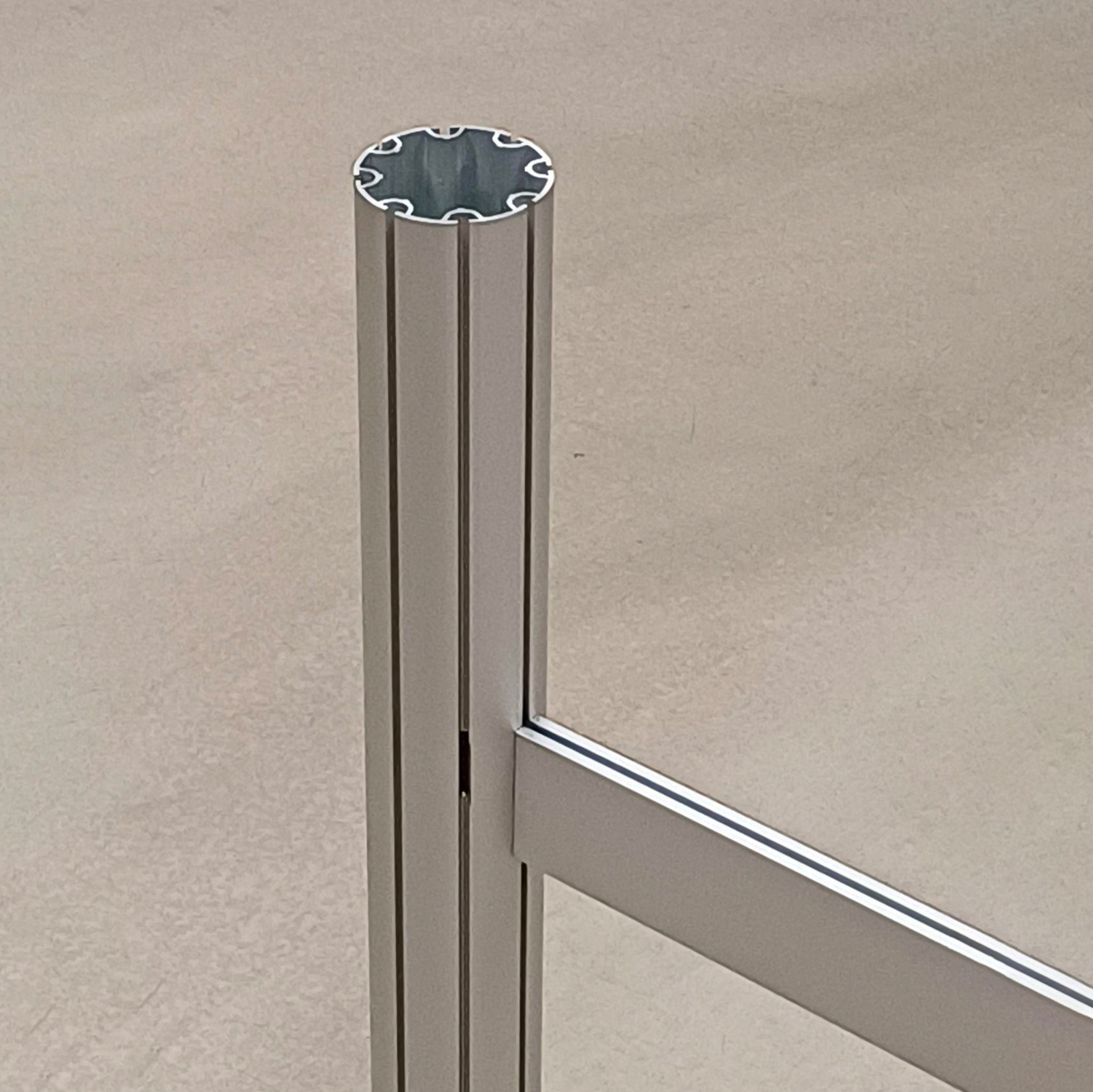
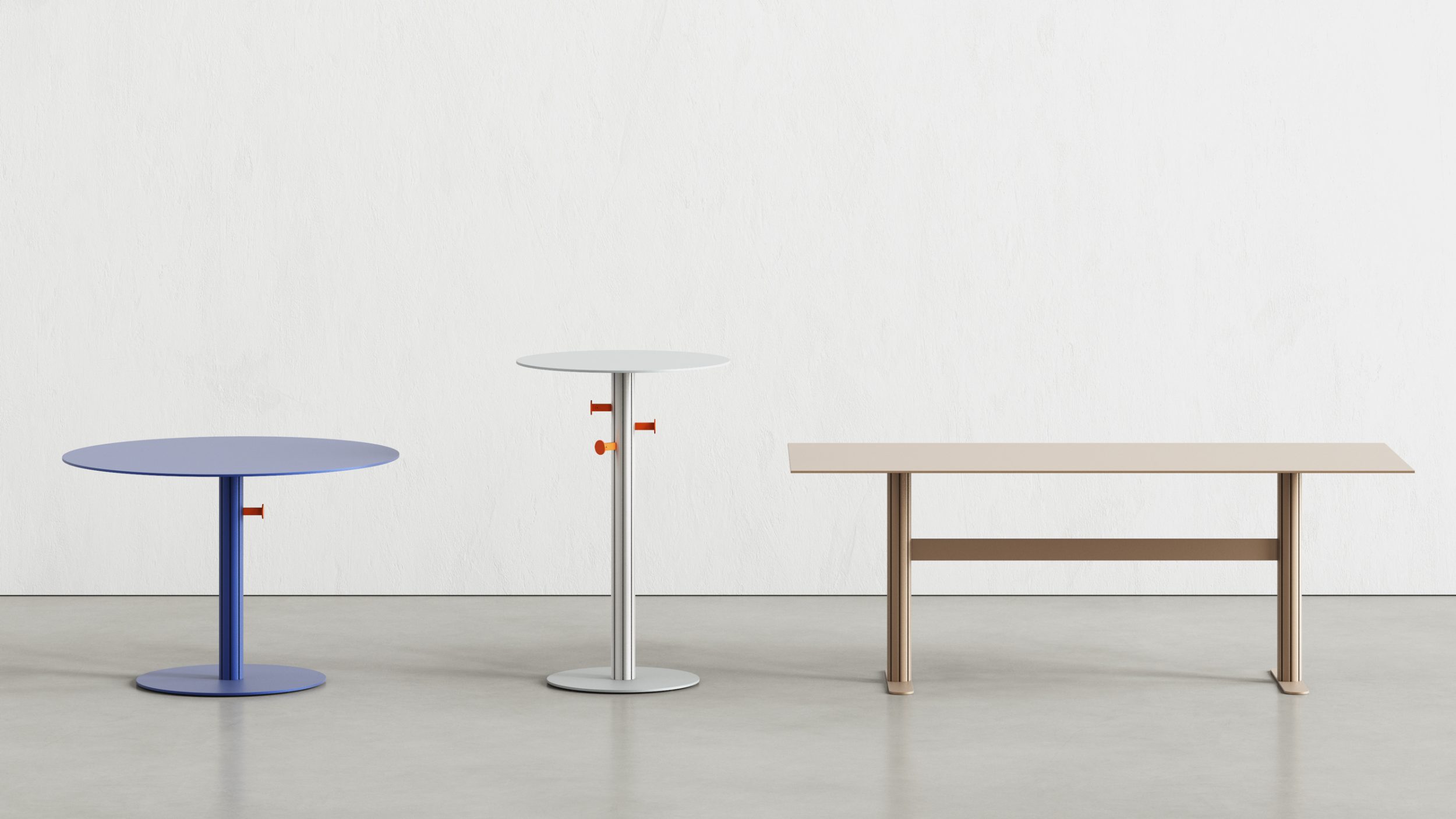
Ottavo is the result of the collaboration between Kristalia and the Swedish design studio Form Us With Love. Its defining feature is its octagonal aluminum leg, marked by grooves that allow accessories to be attached or multiple modules to be connected. Clean lines, slim tabletops, and limitless modularity make Ottavo a solution that adapts elegantly to any setting — from single configurations to articulated systems.
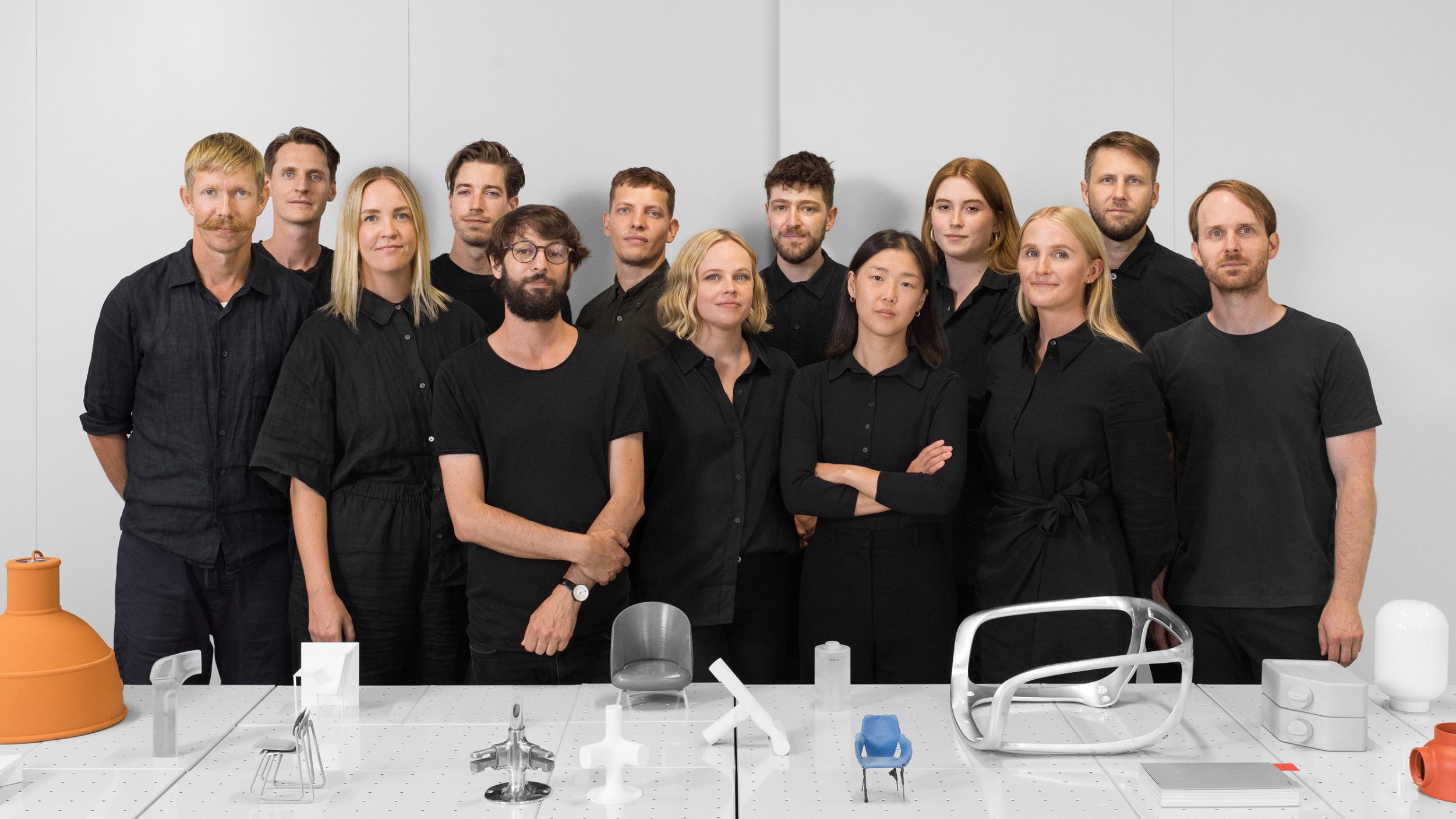
The partnership with Form Us With Love stems from a shared vision: creating products that combine functionality, aesthetics, and a positive impact on the planet. Founded in 2005, the studio collaborates with some of the world’s most iconic brands — from IKEA to Muuto and +Halle — and is recognized by Fast Company as one of the most innovative design companies. Beyond their experience, they bring a design approach focused on improving everyday life through thoughtful, responsible creation.
Textile Tabletop™ is a circular, high-quality alternative developed by Kvadrat Really. Made by recovering and regenerating end-of-life textiles, it offers a decorative, high-performance, and responsible solution compared to conventional tabletop materials.
Since 2013, Kvadrat Really has been committed to transforming textile waste into premium engineered materials. This continuous journey is driven by employees, partners, and suppliers who share the same vision: building a future without waste. In 2025, Kvadrat Really reduced the CO₂ footprint of Textile Tabletop™ from 13.3 kg/m² to 9.4 kg/m² — an estimated 30% decrease compared to a conventional tabletop. This result considers the entire lifecycle, from raw material extraction to the finished product ready for installation.